Online Yoga Classes vs In-Studio: Pros and Cons
Online yoga classes vs in-studio — compare cost, convenience, community, instruction quality, and motivation. Find the best option for your lifestyle.
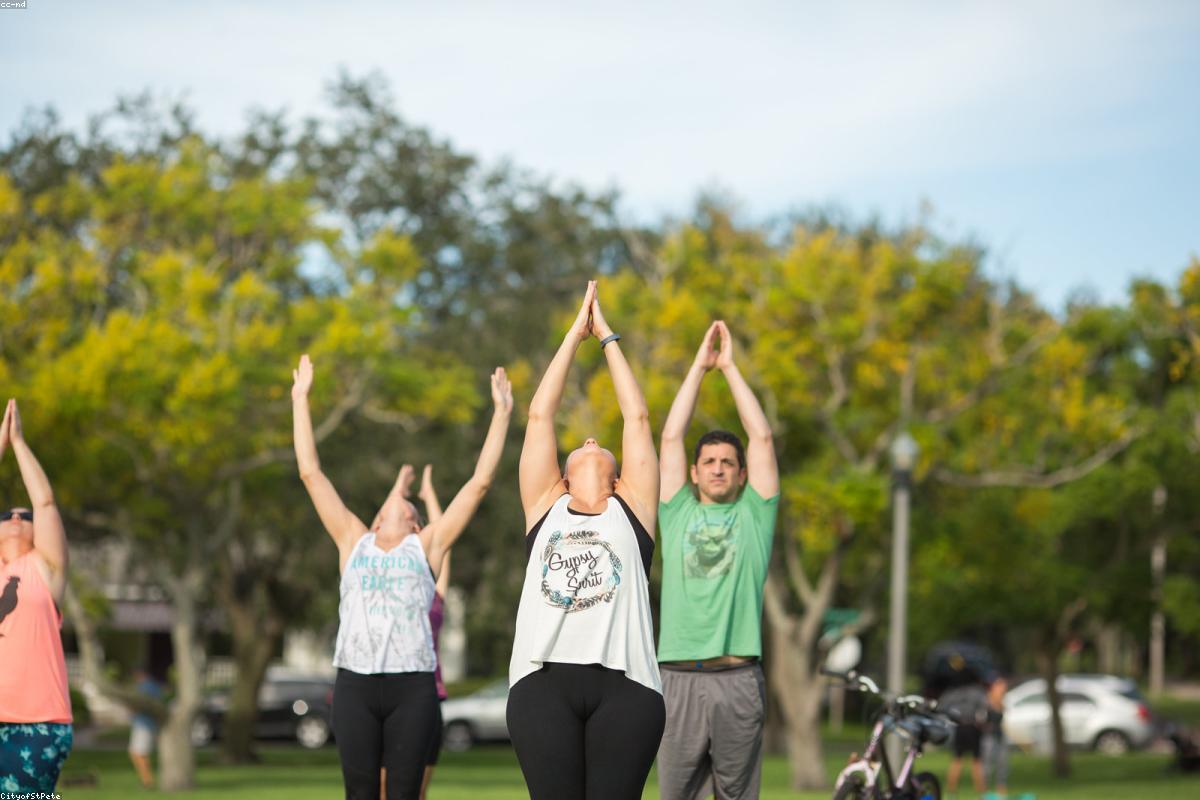
Online Yoga Classes vs In-Studio: Pros and Cons
I walked into my first yoga studio in 2012 with a borrowed mat, a cotton t-shirt, and zero idea what I was doing. The teacher adjusted my downward dog. She pressed my heels toward the mat. I thought I might die. I loved it.
Twelve years later, I have taught over 3,000 classes. I have worked with students who could barely lift their arms overhead and students who could stack their ankles behind their ears. I have taught in hot studios, cold studios, church basements, and park lawns. And in 2020, I taught from my living room into a laptop camera.
Here is what I learned the hard way: online yoga and in-studio yoga are not the same thing. One is not better than the other. They are different tools for different needs. And if you pick the wrong one for your situation, you will quit. I have seen it happen.
This is a breakdown of both. No fluff. No marketing spin. Just what I have lived through with my own body and watched play out in hundreds of students.
The Cost Difference Is Not Small
Let me be blunt. Money matters.
In-studio unlimited memberships in most US cities run between $80 and $200 per month. Drop-in classes cost $15 to $30. That is a single hour of movement. If you go three times a week, you are looking at $180 to $600 per month depending on your city and studio tier.
Online classes? Free to $25 per month. Some platforms like Yoga with Adriene are completely free. Others like Omstars or Alo Moves charge $10 to $20 monthly for access to thousands of classes.
I have a student named Jenna who was spending $240 a month on studio classes. She switched to online during the pandemic. She now pays $15 a month. She practices more often. She told me she wished she had switched years ago.
But here is the catch. Cheap does not mean effective. I have seen people burn through free YouTube classes with bad alignment cues and end up with shoulder pain. You get what you pay for in terms of instruction quality. But you do not need to spend studio prices to get good instruction.
The equipment factor matters too. In a studio, you show up with nothing but a water bottle. Online, you need your own gear. If you are starting from scratch, check out the yoga equipment for beginners guide to understand what you actually need versus what the marketing tells you to buy.
Convenience Versus Commitment
I have a student named Marcus. He works 60-hour weeks in finance. He has two kids under five. He told me he wanted to start yoga for two years before he actually did it.
What stopped him? The commute. His closest studio was 18 minutes away by car. Add parking, changing, and the drive back. That is 45 minutes of overhead for a 60-minute class. He could not justify 105 minutes for one class.
He started online. He rolls out of bed, walks to his living room, and hits play. Zero commute. He has practiced every day for eight months now.
This is the killer advantage of online yoga. It removes every barrier between you and the mat. You do not need to pack a bag. You do not need to drive. You do not need to arrive early to get a spot. You just do it.
But convenience has a dark side. When you never leave your house, your practice can feel small. I have practiced online for weeks at a time. It works. But I have also realized that I skip savasana more often at home. I cut classes short. I get distracted by my phone buzzing.
The studio forces you to commit. You paid for the class. You drove there. You are in the room. You are going to stay for the whole thing. That external structure matters for some people.
The Feedback Problem Nobody Talks About
This is the biggest issue with online yoga. And it is the one I see students struggle with most.
In a studio, a teacher can see you. They can walk over and adjust your alignment. They can say “your right hip is lifting” or “tuck your tailbone” or “press through the base of your big toe.” These micro-corrections add up over time. They prevent injury. They deepen your practice.
Online, the teacher cannot see you. Even in live Zoom classes, the teacher is watching 30 tiny boxes. They cannot see your alignment. They cannot see that your front knee is tracking past your ankle in warrior two. They cannot see that you are dumping into your lower back in downward dog.
I hurt my shoulder doing online yoga. I was following a class, pushing into chaturanga with bad form. The teacher on screen could not see me. I did not know I was doing it wrong until the pain showed up three weeks later.
If you practice online, you need to be honest with yourself about your body awareness. Some people have it naturally. Most do not. If you are a beginner, I strongly recommend starting with in-studio classes or at least mixing them in until you understand basic alignment.
For those starting at home, the yoga for beginners start at home guide covers the foundational poses you need to master before you can safely practice without a teacher watching you.
Community: Real Connection Versus Digital Vibes
I have cried in a yoga studio. Not because of the poses. Because of the people.
There is something about breathing together in a room. The sound of thirty people exhaling at the same time. The energy that builds when a class is really cooking. The way a stranger next to you can become a friend over months of shared practice.
I still remember the woman who handed me a tissue during a particularly emotional class. I never even learned her name. But that moment mattered.
Online yoga cannot replicate this. It can approximate it. Some platforms have live chat. Some have community forums. But typing “great class” into a chat box is not the same as looking at the person next to you and smiling because you both survived a brutal balancing sequence.
However, online communities have their own strengths. I have students who joined niche online yoga groups for people with chronic pain. They found others who understood their limitations. They found teachers who specialized in their condition. That would never happen in a small local studio.
The studio community is wide but shallow. The online community can be narrow but deep. Neither is superior. They serve different needs.
Variety and Choice
In a studio, you are limited to the teachers on staff. If you live in a small town, you might have three teachers. If you live in a city, you might have thirty. But you are still limited to their schedules and styles.
Online, you have access to thousands of teachers from around the world. You can take a yin class from a teacher in Thailand at midnight. You can do a power flow from a teacher in New York at 6 AM. You can explore Ashtanga, Iyengar, Vinyasa, Hatha, Kundalini, restorative, and everything in between.
This variety is valuable. I have learned more about different yoga traditions from online classes than I ever did in studios. I took a pranayama workshop from a teacher in India. I learned arm balance progressions from a teacher in California. My practice expanded dramatically.
But variety can also be a trap. I see students jumping from class to class, teacher to teacher, never settling into a consistent practice. They sample everything and master nothing.
The studio forces consistency. You show up on Tuesday at 6 PM because that is when the class is. You learn the teacher’s style. You build a relationship with that teacher. They learn your body. Over months, they can guide you deeper because they know your history.
Online, you are always a beginner with every new teacher.
Privacy and Comfort
Some people do not want to be seen.
I have a student named Rachel who has severe anxiety. She told me she could not walk into a yoga studio. The thought of being in a room with strangers, of potentially being judged, was too much. She tried online yoga. She practiced in her bedroom with the door locked. She cried during her first class. But she kept going.
Six months later, she joined a studio. She started with the back row, in the corner. Now she teaches.
Online yoga gave her a safe starting point. No one watched her fall out of tree pose. No one saw her modify every single vinyasa. She built confidence in private before she was ready to be seen.
This matters. Not everyone has the privilege of feeling safe in a public space. Online yoga removes that barrier completely.
But privacy also means no accountability. When no one sees you, it is easy to skip practice. It is easy to stop halfway through. It is easy to tell yourself you will do it tomorrow.
I have gone through phases where I practiced online every day for two months. And I have gone through phases where I opened the app, stared at it, and closed it without doing anything.
Distractions and Environment
My home practice is interrupted by my cat walking across my mat, my phone buzzing, the mail being delivered, and my neighbor starting his leaf blower at exactly the wrong moment.
A studio is designed for practice. The lighting is controlled. The temperature is set. The floor is clean. There are no dishes in the sink calling your name.
I once taught a student who practiced online in her kitchen. She told me she spent half the class thinking about the groceries she needed to put away. She could not focus.
The environment matters more than people admit. If your home is chaotic, online yoga will feel like one more thing to manage. If your home is calm, online yoga can be a sanctuary.
Be honest about your space. If you cannot find 30 minutes of quiet in your home, the studio is probably a better option. If you can, online yoga offers unmatched flexibility.
The Hybrid Solution That Actually Works
After years of doing both, here is what I recommend to my students.
Start in a studio. Take at least 10 to 20 classes with a good teacher. Learn the basics. Learn what proper alignment feels like. Get adjusted. Build a foundation.
Then supplement with online classes. Use online for days when you cannot make it to the studio. Use it for specific styles your studio does not offer. Use it for recovery days when you need a gentle practice.
This hybrid approach gives you the best of both worlds. You get the feedback and community of the studio. You get the flexibility and cost savings of online.
I have been doing this for three years now. I go to the studio twice a week for alignment-focused classes. I practice online three or four times a week for everything else. My practice is stronger than it has ever been.
The equipment requirements for this hybrid model are modest. A quality mat that stays at home for daily practice. A set of blocks and a strap. Perhaps a bolster if you incorporate restorative sessions into your week. The best yoga mat for home practice recommendations will guide you toward mats that excel in a home environment. And the yoga mat buying guide ensures your first purchase is the right one rather than a costly mistake. If you also want a lightweight travel mat for studio visits, the best yoga mat for home practice has specific recommendations for portable, packable options. And if you are ready to start building your hybrid practice today, Amazon’s yoga mat selection is the fastest route from decision to delivery.
Who Should Choose Online Yoga
You are a good candidate for online-only practice if:
You have prior yoga experience. You know what a neutral spine feels like. You can feel when your alignment is off. You have enough body awareness to self-correct.
You have a tight budget. Studio memberships are expensive. If money is tight, online yoga keeps you practicing without financial stress.
You have scheduling constraints. If you work odd hours, travel frequently, or have unpredictable days, online yoga fits around your life instead of the other way around.
You are anxious about group settings. Start online. Build confidence. Join a studio when you are ready. Or never join a studio. Both are valid.
You have limited mobility or health conditions. You can find specialized online classes for your specific needs. You can pause, rewind, and modify without feeling self-conscious.
Who Should Choose In-Studio Yoga
You are a good candidate for studio practice if:
You are a complete beginner. You need hands-on feedback. You need a teacher to adjust you. You need to see and feel what correct alignment looks like.
You struggle with motivation. You need external structure. You need to show up because someone is expecting you. You need the social pressure to keep you consistent.
You want community. You want to make friends. You want the energy of a room full of people breathing together. You want to feel like you belong to something.
You have a chaotic home environment. If your home is loud, small, or full of distractions, the studio gives you a dedicated space to practice.
You enjoy the ritual. The drive. The changing room. The smell of the studio. The sound of the door closing behind you. The separation between your yoga life and your regular life.
| Monthly Cost | Free to $25 | $80 to $200 (unlimited) | | Per-Class Cost | Essentially $0 to $2 | $15 to $30 (drop-in) | | Scheduling | Anytime, any day | Fixed class times | | Commute Time | Zero | 10 to 40 minutes round-trip | | Teacher Feedback | Minimal to none | Hands-on adjustments, verbal cues | | Community | Digital (forums, live chat) | In-person, face-to-face | | Variety of Teachers | Nearly unlimited | Limited to studio roster | | Privacy | Complete | Practicing in a group setting | | Equipment | You provide everything | Studio provides props, some mats | | Distractions | Home environment (pets, phones, family) | None (studio is a dedicated sanctuary) | | Pace Control | Rewind, slow down, repeat | Fixed pace set by the teacher |
Related Guides
What I Wish Someone Had Told Me
I spent years thinking online yoga was inferior. I judged it. I told my students they had to come to the studio. I was wrong.
Online yoga is not inferior. It is different. It requires more self-discipline and more body awareness. But it also offers freedom that a studio never can.
The studio is not superior either. It is expensive and rigid. It requires you to fit your life around someone else’s schedule. But it offers feedback and connection that online cannot match.
The answer is not one or the other. The answer is both. Use each for what it does best. Let go of the idea that you have to pick a side.
I still go to the studio. I still teach online. I still roll out my mat in my living room at 6 AM when I do not feel like driving anywhere. My practice is richer because of all three.
Start where you are. Use what works. Change when you need to. That is the real yoga.
The equipment requirements for this hybrid model are modest. A quality mat that stays at home for daily practice. A set of blocks and a strap. Perhaps a bolster if you incorporate restorative sessions into your week. The best yoga mat for home practice recommendations will guide you toward mats that excel in a home environment. and how to choose a yoga mat for beginners ensures your first purchase is the right one rather than a costly mistake. If you also want a lightweight travel mat for studio visits, the yoga mat thickness guide has specific recommendations for portable, packable options. And if you’re ready to start building your hybrid practice today, Amazon’s yoga mat selection is the fastest route from decision to delivery.
Every mat we recommend has been personally tested by our team. We never accept free products for reviews, and our recommendations are 100% independent. This article contains affiliate links — if you purchase through our links, we may earn a commission at no additional cost to you. Learn more.