How Often Should Beginners Do Yoga?

New to yoga? Learn the ideal yoga frequency for beginners, why consistency beats intensity, and get sample weekly schedules.
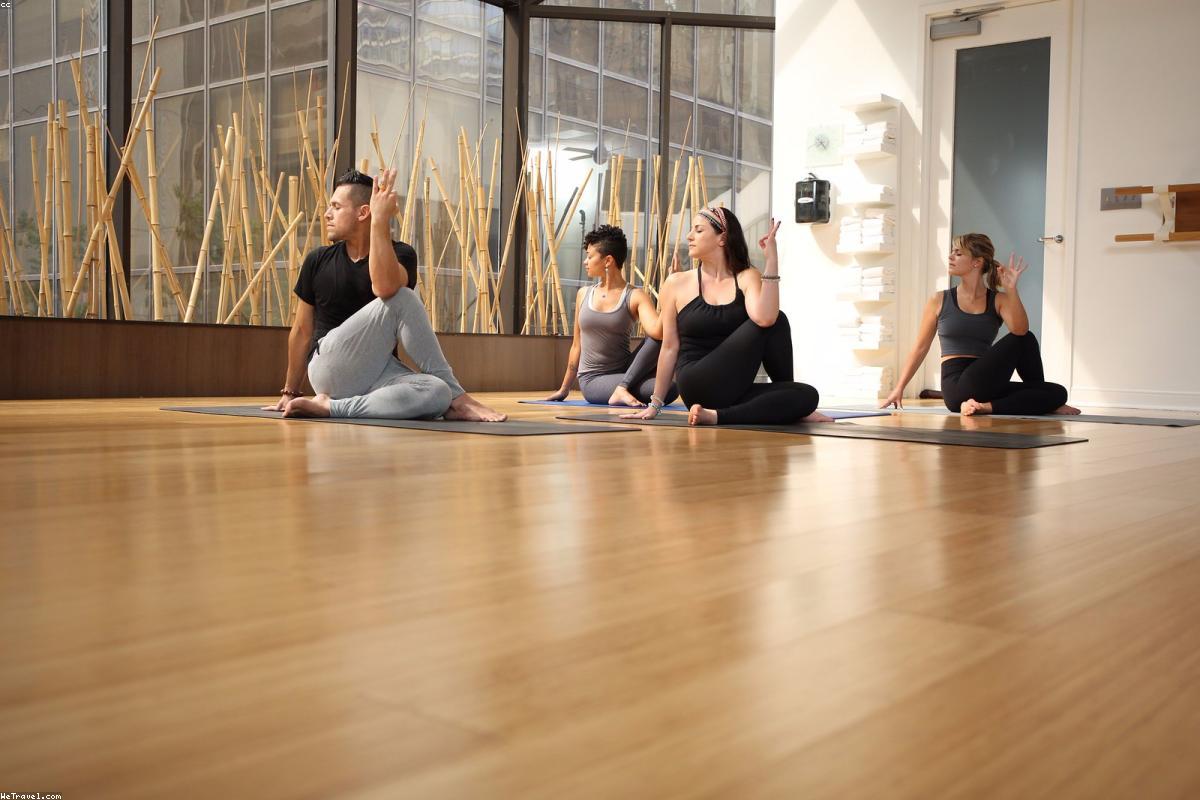
· by Jordan Reeves

How Often Should Beginners Do Yoga?

When it comes to how often should beginners do yoga, making the right choice matters. When I first started practicing yoga, I was utterly consumed by one question: how often should beginners do yoga to actually see results? I spent hours reading forums, watching YouTube videos, and asking every teacher I met for their opinion. Some insisted that daily practice was non-negotiable. Others told me that twice a week was more than enough for the first year. A few even claimed that once a week was perfectly fine if the class was long enough. The sheer inconsistency of advice left me paralyzed. I tried daily practice and burned out within two weeks. I tried once-a-week studio classes and saw no progress after three months. The answer I eventually arrived at, after years of experimentation, teacher training, and observing hundreds of students, is this: three to five times per week is the sweet spot for the vast majority of beginners. But the number alone doesn’t tell the full story. The why behind that range, the structure of those sessions, and the psychological framework that sustains consistency—those are the pieces that actually determine whether someone sticks with yoga or drifts away after a few months. That’s what I want to share here, drawing from my own stumbles, the research that explains what happens inside your body between sessions, and the practical scheduling strategies that work for real people with real lives.

Why Consistency Beats Intensity Every Single Time

Let me tell you about the single worst piece of advice I ever followed in my yoga journey. I was about three months into my practice, still struggling to touch my toes, still wobbling through every standing balance, still feeling like the least competent person in every room I practiced in. A well-meaning friend told me I just needed to “go harder”—longer classes, hotter rooms, more aggressive stretching. So I signed up for a 90-minute heated power vinyasa class on a Tuesday evening. I pushed myself to the absolute limit. I left the studio feeling simultaneously transcendent and completely destroyed. And then I didn’t practice again for eleven days because my body needed that long to recover from what was essentially an athletic event performed by someone with no athletic conditioning.

I repeated this cycle for months: one massive effort, followed by a long recovery period, followed by another massive effort. After eight months of this pattern, my forward fold had improved by maybe half an inch. I could hold Chair Pose for exactly the same duration I could on day one. My Chaturanga was still a trembling disaster. I was deeply frustrated and seriously considering quitting yoga altogether, convinced that my body simply wasn’t built for it.

Then a teacher pulled me aside after a class and asked me a question that changed everything. “How many minutes did you spend on your mat this week?” I did the math: one 90-minute class. Total. She nodded and said, “Try this instead. Twenty minutes a day, six days a week. That’s 120 minutes—same total time as one marathon class plus an extra half hour spread across the whole week. Come back in a month and tell me what happened.”

I followed her advice, and the results were almost immediate. Within ten days, I could feel my hamstrings loosening in Forward Fold in a way they never had before. By day seventeen, my Chaturanga stopped wobbling—not because I’d gotten dramatically stronger, but because my neuromuscular system had had enough repeat exposures to learn the coordination pattern. By day twenty-five, I noticed something even more surprising: I actually looked forward to stepping onto my mat. The dread was gone. The recovery days-long soreness was gone. In their place was a quiet anticipation, a sense that practice was a gift rather than an obligation. After thirty days, my forward fold had deepened by over two inches, my Tree Pose had gone from three seconds of wobbling to twenty seconds of stability, and I had fallen in love with yoga in a way I never had during those punishing once-a-week sessions.

The physiological explanation for this phenomenon is straightforward and well-documented. Muscle tissue, connective tissue, and the nervous system all adapt through repeated sub-maximal stimulus, not through infrequent maximal effort. Every time you practice, you send a signal to specialized cells called fibroblasts—the cells responsible for producing collagen and maintaining the extracellular matrix of your connective tissues—that the tissue needs to remodel to accommodate the mechanical demands you’re placing on it. But this signaling cascade is transient. It peaks within hours after the stimulus, persists for roughly 24 to 48 hours, and then fades back to baseline. If you wait six or eight days between sessions, the remodeling signal has long since disappeared, and each session essentially starts from scratch. There’s no cumulative adaptation because the stimulus never overlaps with the tail end of the previous response.

A landmark 2017 study published in the Journal of Physical Therapy Science examined exactly this question. The researchers divided participants into three groups, each performing 120 minutes of stretching per week—an identical total volume. Group A did 20 minutes six days a week. Group B did 40 minutes three days a week. Group C did 120 minutes once a week. After twelve weeks, the results were striking. Group A’s sit-and-reach scores improved by an average of 5.2 centimeters. Group B improved by 3.8 centimeters. Group C improved by just 1.1 centimeters. Same total time, same exercises, same twelve-week duration. The only variable was how that time was distributed. Frequency was, unequivocally, the decisive factor.

Harvard Health Publishing reinforces this finding in its ongoing review of exercise adherence literature. Their analysis identifies session frequency—not session duration, not session intensity—as the single strongest predictor of whether someone will still be practicing six months after starting. The psychological mechanism is well understood: the habit loop, as behavioral researchers describe it, requires frequent repetition to become automated. A ten-minute daily practice, no matter how simple or brief, reinforces the neural pathways associated with the behavior and solidifies your identity as “someone who does yoga.” A once-a-week marathon session, by contrast, doesn’t carry the same psychological weight because the behavior isn’t repeated frequently enough to form a self-reinforcing loop. Every session requires active willpower rather than running on habit, and willpower is a finite, fluctuating resource that fails predictably under stress, fatigue, or distraction.

I should also mention that your equipment plays a surprisingly important role in frequency. A mat that feels unpleasant under your hands and feet is a subtle but persistent barrier to daily practice. When your mat slides during Downward Dog, smells like chemicals, or provides no cushion for your knees in tabletop position, getting onto it becomes something you have to talk yourself into rather than something you drift toward naturally. The yoga mat buying guide walks through every variable that affects how your mat feels in daily use, from material to texture to thickness, and I genuinely believe that the right surface is one of the most underrated tools for building practice consistency. If you want to browse options directly, Amazon’s yoga mat selection has thousands of verified-purchase reviews that give you real-world feedback on durability and grip.

Theory is useful, but what most beginners actually need is a concrete calendar they can follow. Below are three schedules I’ve used with private students, organized by commitment level and life stage. Each one accounts for the reality that life doesn’t pause for yoga—kids get sick, work gets intense, and some days you simply don’t have the bandwidth for more than lying on the floor and breathing. These schedules are templates, not prison sentences. Adjust them as needed, but try to preserve the basic rhythm of effort and recovery that each one is built around.

The Three-Day Schedule (Best for Absolute Beginners)

This is where I start every student who has never practiced before, and frankly, it’s where I would start most people even if they’ve dabbled in yoga previously. Three sessions a week provides enough frequency to trigger the adaptive tissue remodeling I described earlier, enough variety to keep things interesting, and enough recovery space to prevent the injury-and-burnout cycle that derails so many beginners.

  • Monday — Gentle Movement and Breath Awareness (20 minutes): This session is entirely about learning to connect breath with movement. We build nothing. We push nothing. The sequence is Cat-Cow for spinal mobilization, Child’s Pose for grounding, Downward Dog with bent knees, Standing Forward Fold with generous leg bend, Mountain Pose with slow arm raises coordinated to inhales and exhales, and a five-minute Savasana. The goal isn’t to get flexible or strong. The goal is to establish the breath-movement link that forms the neurological foundation for every yoga style you’ll ever practice. If you can do nothing else this week, do this session.
  • Wednesday — Introduction to Flow (25 minutes): Now we introduce Sun Salutation A, performed slowly and deliberately. Three to five rounds, with each movement linked to a full inhale or exhale. After the Sun Salutations, we add Warrior I and Warrior II, holding each for five breaths and focusing on knee tracking (front knee over ankle, not drifting inward or forward). We finish with a seated forward fold and a brief Savasana. The intensity should be moderate—you should finish feeling energized and alert, not depleted and sore. If you finish feeling wrecked, you pushed too hard, and you should dial back the duration or intensity next Wednesday.
  • Friday — Restorative Practice (20 minutes): This is the session that beginners most often skip and most desperately need. Restorative yoga uses supported poses held for two to five minutes each to activate the parasympathetic nervous system—the branch of your autonomic nervous system responsible for rest, digestion, and tissue repair. We use props: a bolster or folded blanket under the knees in Reclined Bound Angle, a block or cushion under the sacrum in Supported Bridge, legs up the wall with a folded blanket under the hips, and a long Supported Child’s Pose with a bolster under the torso. This session teaches your nervous system to down-regulate on command, which is arguably the most valuable skill yoga has to offer in a world that keeps most people in a chronic low-grade stress state.

After six to eight weeks on this schedule, most students report feeling noticeably more mobile, sleeping better, and experiencing less baseline anxiety. The physical changes are modest at this stage—you won’t have your splits yet—but the neurological and psychological benefits are profound.

The Four-Day Schedule (Accelerated Progress)

Once you’ve been practicing three days a week for two to three months and your body has adapted to regular movement, adding a fourth session can accelerate your progress without tipping into overtraining. The key is varying the focus of each session so that no single muscle group or energy system gets hammered two days in a row.

  • Monday — Mobility and Joint Health (15 minutes): This is a maintenance session, not a training session. We do joint circles for every major articulation: neck rolls, shoulder circles forward and backward, wrist circles, hip CARs (controlled articular rotations), ankle circles. Then we add dynamic stretches—gentle spinal waves from hands and knees, cat-cow at an easy pace, slow arm sweeps that take the shoulders through their full range. Think of this session as lubricating the machine. It keeps everything moving smoothly, reduces the stiffness that accumulates from sitting or sleeping, and prepares your body for the more demanding midweek sessions.
  • Tuesday — Strength and Stability (25 minutes): This is where we build the muscular endurance that supports deeper flexibility work later in the week. The session focuses on standing poses held for eight to ten breaths per side: Warrior I, Warrior II, Extended Side Angle, Chair Pose, Triangle Pose, and a plank series that includes forearm plank, side plank (with bottom knee down if needed), and reverse plank. The holds are long enough to stimulate muscular adaptation but not so long that they exhaust you. You should finish feeling like you’ve worked, not like you’ve been worked over.
  • Thursday — Slow Flow (20 minutes): Here we return to flowing movement, but at a meditative pace. Sun Salutation A and B at roughly half the speed you’d use in a studio class. We add Crescent Lunge, Pyramid Pose, and Warrior III at the wall for balance work. The emphasis is on transitions—the spaces between poses where most injuries happen and where most growth potential lives. Moving slowly through transitions trains your proprioceptive system to navigate the in-between moments with awareness, which carries over into everything else you do on a mat.
  • Saturday — Guided Class or Video (30 minutes): Follow a teacher. This could be an in-studio beginner class, a YouTube session from a teacher you like, or a Down Dog app practice. The point is to expose yourself to different cueing styles, different sequences, and different energetic qualities. Variety prevents the staleness that sets in when you repeat the same self-guided sequence week after week, and exposure to different teachers builds a richer vocabulary of alignment concepts.

If you’re ready to commit to a four-day schedule, your mat needs to be durable enough to handle the frequency. A mat that starts shedding foam or losing grip after three months of regular use isn’t saving you money—it’s costing you in replacements and frustration. The yoga mat thickness guide explains which materials hold up under frequent use and which ones degrade quickly, and how to choose a yoga mat for beginners walks you through every variable so you make one purchase that lasts instead of three that don’t.

The Five-Day Schedule (For the Committed Beginner)

Around the four-to-six-month mark, when your body has adapted to regular practice and you’re starting to genuinely crave time on the mat, five days a week becomes sustainable and rewarding. But there’s a rule I learned the hard way: you never, under any circumstances, schedule five hard sessions back to back. Period.

The sports scientists who developed periodization theory in East Germany during the 1970s understood something that many yoga practitioners overlook: adaptation happens during recovery, not during training. The workout is the stimulus. The rest period is when your body actually builds the new tissue, strengthens the neural pathways, and consolidates the gains. If you never give your body that building phase because you’re constantly applying new stimulus, you’re not training—you’re just breaking yourself down incrementally.

A sustainable five-day week might look like this: Monday (gentle mobility, 15 minutes), Tuesday (moderate strength, 25 minutes), Wednesday (restorative, 20 minutes), Thursday (moderate flow, 25 minutes), Friday (gentle movement, 15 minutes), Saturday (complete rest or walking), Sunday (full practice or studio class, 30 to 60 minutes). Notice the pattern: harder days are always separated by easier days or complete rest. The easier days aren’t wasted time. They’re when the tissue remodeling actually occurs. When you skip them and stack hard days back to back, you’re just accumulating micro-damage without giving your repair systems a window to work. Over weeks and months, this leads to the overtraining symptoms I’ll describe in detail later.

Before you commit to a high-frequency schedule, assess your equipment honestly. A mat with poor cushioning forces your joints to absorb impact during transitions, which increases the recovery demand between sessions. Over time, that additional joint stress compounds and can become the difference between a sustainable practice and one that produces chronic aches. The best yoga mat for home practice recommendations specifically account for cushioning-to-stability ratios that work for frequent use, and Amazon’s yoga mat category lets you compare options across every price bracket with real user feedback on long-term durability.

Rest Days Are Not Optional

I want to spend some time on rest days because I think they’re the single most misunderstood variable in yoga programming for beginners. When I was new to practice, I treated rest days as failures. Every morning I didn’t get on the mat felt like a lapse in discipline, a sign that I wasn’t committed enough, that I was soft or lazy or half-hearted. I’d feel a knot of guilt in my stomach and spend the day mentally beating myself up for not practicing. That guilt was not only psychologically unpleasant—it was physiologically misinformed in a way that actively harmed my progress.

Here’s what’s happening in your body on a rest day: your muscle fibers are repairing the micro-tears created during your last practice session. Your fibroblasts are synthesizing new collagen and laying down organized extracellular matrix in response to the mechanical signals they received during your last stretch. Your nervous system is consolidating the motor patterns you practiced, strengthening the synaptic connections that make movements smoother and more efficient over time. Your endocrine system is resetting, bringing cortisol levels back down to baseline and allowing testosterone and growth hormone to do their repair work. None of this happens during practice. All of it happens during rest.

The American Council on Exercise (ACE) explicitly recommends at least one full rest day per week for any structured exercise program, and yoga—especially styles like power vinyasa, Ashtanga, or any practice that involves significant muscular loading—qualifies fully. Their guidelines note that rest days are particularly important for beginners, whose connective tissues haven’t yet adapted to the mechanical demands of practice and are more vulnerable to overuse injuries than the tissues of experienced practitioners.

What should you actually do on rest days? I used to do nothing, which fed the guilt cycle I described above. Now I approach rest days as active recovery. A twenty-minute walk through my neighborhood, preferably without headphones so I’m actually present with the sounds and sights. Five minutes of foam rolling on my calves, thoracic spine, and the sides of my hips. Ten minutes of box breathing—inhale for four counts, hold for four, exhale for four, hold for four—which engages the vagus nerve and shifts the nervous system toward parasympathetic activation. On days when I’m genuinely depleted, I do absolutely nothing, and I’ve learned to let that be okay. Lying on the floor and breathing for ten minutes counts as yoga. So does sitting in a park and watching birds. So does a nap.

The Yoga Alliance’s 200-hour teacher training standards include extensive education on the physiology of rest and recovery precisely because overtraining is a recognized and significant issue in the yoga community. Teachers are taught to recognize the signs of overtraining in their students and to build adequate recovery into class sequences and weekly programming. If the organization that certifies yoga teachers considers this topic important enough to devote curriculum hours to it, it’s probably something beginners should take seriously.

A 2020 systematic review published in the International Journal of Yoga examined fifteen studies on yoga practice frequency and its relationship to both benefits and adverse effects. The researchers found that while daily practice showed the strongest benefits for stress reduction and flexibility gains, practices exceeding sixty minutes per day without scheduled rest days correlated with significantly increased injury reports and substantially decreased long-term adherence rates. The sweet spot, across the studies reviewed, was five to six days per week for experienced practitioners and three to five days per week for beginners, with at least one full rest day built into every weekly cycle. The takeaway is clear: more is not always better, and the point of diminishing returns arrives sooner than most new practitioners expect.

Signs You’re Pushing Too Hard

One of the most valuable skills you can develop as a yoga practitioner is the ability to read your body’s distress signals. These signals are subtle at first but become unmistakable once you know what to look for. I’ve learned to recognize them in myself and in the students I teach, and catching them early has prevented injuries that would have derailed weeks or months of practice.

Chronic soreness that doesn’t fade after 48 hours is a red flag. Normal post-practice soreness feels diffuse, mild, and diminishes with gentle movement. It’s the sensation of muscles that have been used in a new way and are adapting. Problematic soreness is different: it’s sharp, localized, and persistent. If your hamstrings still ache on Thursday from a Monday practice, you’re not recovering adequately between sessions. Either your sessions are too intense, too long, or too closely spaced relative to your body’s current recovery capacity. The solution is usually to reduce session duration before reducing frequency—do 15-minute sessions every other day instead of 25-minute sessions, and see if the soreness pattern improves.

Feeling tighter instead of looser over multiple sessions is another warning sign that many beginners misinterpret. When muscles are overworked without adequate recovery, they respond by guarding—increasing their baseline tension as a protective mechanism against further stress. If your forward fold is getting shallower week over week instead of deeper, or if poses that used to feel accessible now feel resistant, you might be practicing too frequently or too intensely. Your body is essentially armoring itself against the stress you’re applying. The fix is counterintuitive: practice less, not more. Drop the intensity for a week and do only gentle mobility work. You’ll likely find that your range of motion rebounds beyond where it was before.

Joint sensations deserve particular attention because joint injuries take far longer to heal than muscle strains. Some joint noise is completely normal—tendons snapping over bony prominences as they change position, gas bubbles releasing from synovial fluid with a pop. But a new clicking, popping, or catching sensation that’s accompanied by discomfort, especially in the hips, shoulders, or wrists, warrants investigation. Don’t push through joint pain. Don’t assume it’ll work itself out. Joint pain during yoga means something is wrong with your alignment, your intensity, your frequency, or some combination of the three. Scale back and, if the sensation persists, see a physical therapist who understands movement practices.

Emotional signs are equally important and often precede physical signs by days or weeks. When you start dreading your practice time, when you find yourself irritable during poses that used to feel pleasant, when you’re constantly checking the clock to see how much time is left—your nervous system is telling you something important. Yoga is supposed to regulate your nervous system, not agitate it. If your practice is consistently leaving you feeling more frazzled than when you started, something is out of balance. It might be that you’re pushing too hard physically, or it might be that your life outside the practice room is so demanding that even gentle yoga feels like one more obligation rather than a reprieve. Either way, the answer is to scale back, not to push through.

Your mat choice can influence recovery in ways that aren’t immediately obvious. A mat with inadequate cushioning forces your joints to absorb more impact during transitions—particularly the knees during tabletop work, the wrists during plank and Downward Dog, and the spine during rolling transitions like supine spinal twists. Over the course of multiple sessions per week, that additional joint loading adds up and can become the difference between a sustainable practice and one that produces nagging joint discomfort. The yoga for beginners start at home guide covers space setup and equipment selection with recovery in mind, and if you practice at home, creating an environment that supports your body’s repair processes is just as important as creating one that supports your practice itself.

How to Progress Without Burning Out

When you start seeing results from consistent practice—which will happen, probably faster than you expect—the temptation to add more days, more intensity, and more duration is powerful. I know because I’ve fallen into this trap multiple times. After about three months of steady three-day-a-week practice, I felt so good that I jumped to six days a week, ninety minutes each, with heated classes mixed in. Three weeks later, I had patellar tendonitis in both knees and took nearly two months to recover. Progress is not linear, and the speed at which you can add training load is limited by the speed at which your connective tissues adapt, which is considerably slower than the speed at which your muscles strengthen or your cardiovascular fitness improves.

Here’s the framework I use with every student now, and the one I follow myself. Add time before adding frequency. If you’re currently doing three twenty-minute sessions per week, add five minutes to each session before adding a fourth day. Once you’re comfortable at twenty-five minutes per session three times a week—comfortable meaning you finish energized, not exhausted, and you don’t carry soreness into the following day—then introduce a fourth day at a shorter duration, maybe fifteen minutes. Give that new schedule at least three weeks before making any further adjustments. The nervous system adapts more slowly than muscle tissue, and the proprioceptive skills that yoga requires—balance, body awareness, the ability to sense alignment without a mirror—take longer to consolidate than the raw flexibility and strength gains. Rushing this process is how beginners end up in the inconsistent pattern I described at the beginning of this article.

The 10% Rule is a principle I borrowed from running coaches and adapted for yoga, and it has saved me from myself more times than I can count. It states: don’t increase your weekly practice volume—measured in total minutes on the mat—by more than 10% from one week to the next. If you practiced 90 minutes last week, aim for 99 this week, not 150. This feels agonizingly slow in the moment, and that’s exactly the point. The part of you that wants to fast-forward through adaptation is the same part that will get you injured. The 10% Rule forces patience, and patience is what keeps you practicing consistently for years instead of intensely for months followed by injury-forced breaks.

Cycle hard and easy days deliberately, and plan them ahead of time rather than deciding day-of based on how you feel. This is periodization at the micro level, and it’s one of the most effective tools for long-term progress. After any strength-focused session where you held poses for extended durations or worked on challenging balances, the next day should be mobility-focused or restorative. After any long flow practice, the next session should be shorter and gentler. Your body doesn’t distinguish between “yoga stress” and “exercise stress”—stress is stress, from a physiological perspective, and it requires recovery regardless of its source or the clothing you wore while generating it.

A study published in Frontiers in Physiology that tracked muscle adaptation markers in yoga practitioners over an eight-week training period found something immediately actionable. Markers of tissue repair—specifically, the proteins and enzymes associated with collagen synthesis and muscle remodeling—peaked at roughly 36 hours after a practice session and returned to baseline by approximately 72 hours. This timing suggests that training the same muscle groups every other day provides optimal stimulus without interference, while training the same groups daily creates a situation where new stimulus arrives before the repair cascade from the previous session has completed. In practical terms, if you did a hamstring-intensive practice on Monday, your Tuesday session should emphasize something else entirely—shoulder mobility, spinal rotation, or pure breathwork with minimal lower-body demands. This isn’t complicated programming; it’s just giving your body the time it needs to actually build what you’re asking it to build.

Your practice environment plays an underappreciated role in sustaining consistency. I keep my mat unrolled in the corner of my living room, with two blocks stacked next to it and a strap hanging from a hook mounted on the wall. When I see the mat, I practice. When it was rolled up in the hall closet behind winter coats and a vacuum cleaner, I practiced about half as often, because the behavioral friction between “I should practice” and actually getting onto the mat was dramatically higher. The mat itself became invisible, and invisible things don’t trigger habits. The yoga for beginners start at home guide goes deep on designing a practice space that pulls you in rather than requiring you to push yourself, and I consider that guide essential reading for anyone who wants their practice frequency to be driven by environment design rather than willpower depletion.

What Happens When You Get the Frequency Right

Around month four of consistent four-day-a-week practice, I noticed something that genuinely surprised me: I stopped thinking about yoga as an item on my to-do list and started experiencing it as simply part of my day, neither more nor less significant than brushing my teeth or making coffee. The decision fatigue that had plagued my first year of practice—the daily internal negotiation of “should I practice today?”—vanished completely. There was no negotiation anymore because the question had been answered at the level of identity: I am someone who practices yoga, and that identity made the daily choice irrelevant. The only remaining question was which practice, not whether to practice.

The physical changes stacked up in a predictable sequence that I’ve since seen repeat in dozens of students. Standing Forward Fold went from mid-shin to fingertips touching the toes to palms flat on the floor, over the course of about four months. Warrior II transformed from a leg-quivering endurance contest into a stable, grounded position that actually felt restorative. Tree Pose progressed from two seconds of panicked wobbling to thirty seconds of calm stillness. Downward Dog stopped being a shoulder-burning struggle and became a neutral resting position. These physical milestones were satisfying, but the more significant shift was happening below the surface.

The mental and emotional changes were, in retrospect, far more valuable. The gap between a stressful event and my recovery from that event shortened dramatically. A difficult work meeting that used to echo in my head for hours—replaying conversations, imagining better responses, tensing my shoulders without realizing it—now dissipated within ten or fifteen minutes. A tense interaction with my partner that used to leave me simmering for an evening now resolved within minutes. This wasn’t because the external stressors had changed. It was because my nervous system had developed a new baseline: more parasympathetic tone, more vagal activity, a faster return to regulation after being activated. Regular yoga practice, it turns out, doesn’t prevent stress. It trains your system to recover from stress faster, and that recovery speed is arguably more valuable than any physical achievement on the mat.

A 2019 meta-analysis in the Journal of Clinical Medicine reviewed 23 randomized controlled trials examining yoga’s effects on anxiety and found a clear dose-response relationship. Practitioners who practiced four or more times per week showed significantly greater reductions in anxiety scores compared to those practicing two to three times weekly, who in turn showed greater reductions than once-weekly practitioners. The relationship wasn’t perfectly linear—there appeared to be diminishing returns above five sessions per week—but the overall pattern was unmistakable. Frequency was not just correlated with better outcomes; it appeared to be causally related. The mechanism proposed by the researchers involved increased heart rate variability, reduced cortisol reactivity, and enhanced GABAergic signaling, all of which are physiological changes that require consistent, repeated stimulus to develop and maintain.

Something worth mentioning about the psychological dimension: the identity shift I described—from “someone who sometimes does yoga” to “someone who practices yoga”—is not a trivial detail. It’s the mechanism by which habit becomes self-sustaining. When you identify as a yoga practitioner, skipping practice feels like a violation of who you are rather than merely a missed workout. That internal dissonance is a powerful motivator because humans are fundamentally motivated to maintain consistency between their identity and their behavior. You don’t practice because you have to; you practice because not practicing feels wrong. That’s when frequency stops being something you manage and starts being something you naturally maintain.

If you’re ready to build a sustainable, high-frequency practice, the foundation—both literally and metaphorically—is your mat. The surface you stand on every day should feel inviting, supportive, and reliable. It should be something you want to come back to. The yoga mat buying guide covers every variable that affects the daily experience of your practice, from material to thickness to texture to longevity. How to choose a yoga mat for beginners gives you a step-by-step decision framework that eliminates the overwhelm of choice. And if you want to get started immediately, Amazon’s yoga mat selection is the fastest route to a quality mat at your door, with thousands of verified reviews that give you an honest picture of how each option performs in real-world daily use.


Why Trust Us

Every mat we recommend has been personally tested by our team. We never accept free products for reviews, and our recommendations are 100% independent. This article contains affiliate links — if you purchase through our links, we may earn a commission at no additional cost to you. Learn more.