Yoga for Flexibility: 30 Day Challenge for Beginners
Start your 30 day yoga for flexibility challenge. Daily 15-minute routines to increase hamstring, hip, and shoulder flexibility.
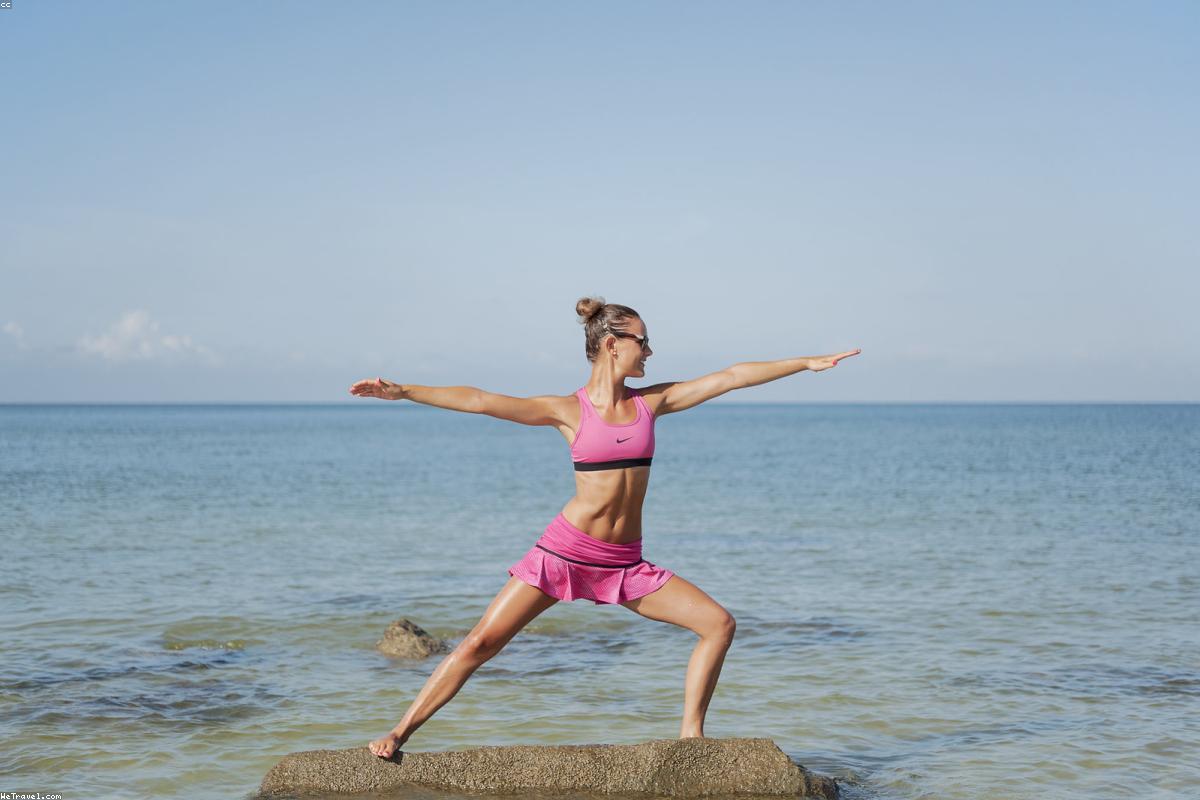
Yoga for Flexibility: 30 Day Challenge for Beginners
When it comes to yoga for flexibility 30 day challenge, making the right choice matters. I spent the first twenty-eight years of my life believing I was simply “not flexible.” I couldn’t touch my toes. I couldn’t sit cross-legged on the floor without my knees floating up around my ears. I assumed flexibility was something you were born with, like eye color or height, and that I’d drawn the short genetic straw. Then a friend challenged me to practice yoga for flexibility every single day for thirty days—just fifteen minutes a session, nothing heroic—and what happened over those four weeks permanently changed how I understand my own body. By day 30, I could fold forward and brush my knuckles against the floor. My hips had opened enough to sit cross-legged without a stack of pillows. My shoulders stopped aching during overhead reaches. This challenge is designed to produce the same results for you, and everything I’m about to share is what I’ve learned from doing it myself and guiding dozens of students through it.
Before you unroll your mat, you need one that won’t work against you. A mat that slips on your floor will make every stretch feel unstable, and instability triggers a protective muscle contraction that directly opposes the lengthening you’re trying to achieve. The yoga mat buying guide covers grip, cushioning, and durability so you’re not fighting your equipment, and the how to choose a yoga mat for beginners guide walks you through the decision in plain language. If you need a mat fast, Amazon’s yoga mat selection offers hundreds of options with verified reviews and quick shipping.
The Science of Flexibility: Why 30 Days Works
Flexibility is not a fixed trait. It’s a trainable physiological capacity that responds to consistent stimulus, and understanding the mechanism behind that response will help you trust the process when progress feels slow.
Phase One: Neurological Adaptation (Days 1–14)
When you stretch a muscle, your body’s first response is defensive. Muscle spindles—sensory receptors embedded within your muscle fibers—detect the lengthening and send an urgent signal to your spinal cord: contract this muscle before it stretches too far. This is the stretch reflex, and it’s a protective mechanism that prevents injury. In the first two weeks of daily stretching, you’re not actually lengthening your muscles in any permanent way. You’re training your nervous system to tolerate greater range of motion before triggering the stretch reflex.
Think of it as recalibrating your internal alarm system. Right now, your hamstrings might fire the stretch reflex at 70 degrees of hip flexion. After two weeks of daily exposure to stretching, that threshold might shift to 80 degrees. The muscle itself hasn’t changed length significantly. Your nervous system has simply raised its tolerance for the stretch before sounding the alarm. This is why you’ll feel noticeably more flexible within the first week—it’s neurological, not structural—and it’s also why those early gains can disappear quickly if you stop practicing. The nervous system is plastic. It adapts fast in both directions.
Harvard Health Publishing describes this process clearly: flexibility training initially improves range of motion by reducing the sensitivity of the stretch reflex, not by physically lengthening tissues. The muscle fibers and surrounding connective tissue begin to remodel structurally only after the nervous system has been retrained to allow greater excursion. This is why a thirty-day challenge actually works: the first half retrains the nervous system, and the second half begins the structural work.
Phase Two: Muscular and Fascial Adaptation (Days 15–30)
Once your nervous system has stopped reflexively fighting the stretch, actual tissue changes can begin. This is the phase where the rubber meets the road. Muscle fibers add sarcomeres in series—essentially, the muscle cells add contractile units end-to-end, which increases the muscle’s resting length. Fascia, the collagen-based connective tissue that envelops every muscle, bone, and organ in your body, also begins to remodel. Collagen fibers reorganize in response to sustained, gentle tension, becoming more pliable and less dense in the directions you’re stretching them.
A 2020 review in the Journal of Bodywork and Movement Therapies discussed fascial remodeling in detail, noting that changes in fascial architecture can be detected after as little as three to four weeks of consistent stretching when the stimulus is applied daily. The key variable is duration under tension, not intensity. This is why a long, gentle hold in Pigeon Pose produces deeper hip flexibility gains than bouncing aggressively through a stretch. The fascia responds to time, not force.
The American Council on Exercise (ACE) reinforces this distinction: static stretching held for thirty seconds or longer produces superior flexibility gains compared to dynamic or ballistic stretching, particularly in previously untrained individuals. The ACE’s position aligns with the broader consensus in exercise science: slow, sustained, daily stretching is the most effective protocol for increasing range of motion in beginners.
Why Fifteen Minutes Daily Beats One Hour Weekly
The temptation is to cram all your stretching into one long weekend session and call it done. I tried this. It doesn’t work. The nervous system adaptation described above requires frequent, repeated exposure to the stretch stimulus. One sixty-minute session per week gives your nervous system six and a half days to reset to its default, guarded state. Fifteen minutes daily applies the stimulus frequently enough that the nervous system stays recalibrated, and the cumulative tissue-level changes begin to compound.
A 2018 study in the Scandinavian Journal of Medicine and Science in Sports compared flexibility outcomes between groups that stretched for five minutes daily versus thirty-five minutes once weekly. After six weeks, the daily group showed significantly greater improvements in hamstring flexibility and hip range of motion. The total weekly volume was identical. The distribution of that volume was what mattered. Frequency beats intensity for flexibility development, especially in the early stages.
Equipment You’ll Need
The 30-day challenge requires minimal equipment, but a few items will make certain poses accessible that would otherwise be frustrating.
A yoga mat with reliable grip. Your hands and feet need to stay planted during stretches. A mat that slides will cause you to tense your muscles against the instability, which directly counteracts the relaxation required for effective stretching. The best yoga mat for home practice recommendations are chosen specifically for consistent grip across different floor types.
Two yoga blocks. Blocks bring the floor closer to you. In Triangle Pose, a block under your bottom hand lets you maintain a long spine instead of collapsing your torso. In Seated Forward Fold, a block under your forehead supports your neck. In Half Splits, blocks under your hands provide stability so you can focus on the hamstring stretch rather than balancing. Cork blocks are more stable. Foam blocks are lighter and more comfortable under joints. Either works for this challenge.
A yoga strap. If you can’t comfortably reach your feet in seated poses—and most beginners can’t—a strap extends your reach. Loop it around the arches of your feet in Seated Forward Fold and hold the ends. Loop it around your foot in Reclined Hand-to-Big-Toe Pose. The strap lets you stretch your hamstrings and inner thighs without rounding your spine, which is where lower back injuries happen.
A blanket or firm cushion. Folded into a firm rectangle, a blanket supports your knees in tabletop poses, lifts your hips in seated poses, and cushions your head in Savasana. You almost certainly own one already.
The yoga equipment for beginners guide details exactly what to buy and in what order so you build your kit efficiently.
The 30-Day Challenge Structure
The challenge is organized into four weeks, each with a specific focus. Every day’s session takes approximately fifteen minutes. You can do more if you have the time and energy, but fifteen minutes is the minimum—and on days when fifteen minutes feels like too much, do ten. The single most important rule of this challenge is consistency over duration. A ten-minute session you actually complete is infinitely more valuable than a thirty-minute session you skip.
Week 1: Foundation and Habit (Days 1–7)
Focus: Full-body gentle stretching, spinal mobility, and establishing the daily practice habit. Low intensity. These sessions should feel restorative, not taxing.
Intensity guideline: You should finish each session feeling looser and more relaxed than when you started. If you feel exhausted or sore, you’re pushing too hard.
The goal of Week 1 is not to gain flexibility. It’s to teach your nervous system that stretching is safe and that a daily mat session is non-negotiable. The poses for Week 1 are the gentlest in the challenge: Child’s Pose, Cat-Cow, Downward-Facing Dog with bent knees, gentle Standing Forward Fold, low lunges, and supported supine twists. Every pose uses breath as the primary tool—you’re breathing into the sensation, not forcing your way deeper.
The habit formation piece is critical here. Research on exercise adherence consistently shows that the first two weeks are the highest-risk period for dropout. The strategy for Week 1 is to make the sessions so short and so gentle that you never have a reason to skip them. Pick a consistent time of day—morning, lunch break, evening—and do your fifteen minutes at that time every day. The routine matters more than the content.
Sample Week 1 Routine (Days 1, 3, 5, 7):
- Child’s Pose — 2 minutes, focus on slow exhales
- Cat-Cow — 10 rounds with breath (3 minutes)
- Downward-Facing Dog — pedal feet for 2 minutes
- Standing Forward Fold — 2 minutes, knees deeply bent
- Low Lunge — 1.5 minutes each side
- Supine Twist — 1 minute each side
- Savasana — 2 minutes
Sample Week 1 Routine (Days 2, 4, 6):
- Child’s Pose — 2 minutes
- Cat-Cow — 10 rounds (3 minutes)
- Downward-Facing Dog — 2 minutes
- Seated Forward Fold with strap — 2 minutes
- Butterfly Pose (Baddha Konasana) — 2 minutes
- Reclined Hand-to-Big-Toe Pose with strap — 1.5 minutes each side
- Savasana — 2 minutes
Alternating between these two templates gives you variety while keeping the intensity low. By Day 7, unrolling your mat should feel automatic rather than effortful.
Week 2: Hips and Hamstrings (Days 8–14)
Focus: Deep hip openers, standing hamstring stretches, and seated forward folds. Longer holds—eight to ten breaths per pose.
Intensity guideline: You should feel a strong stretch but never sharp pain. The sensation should be diffuse and muscular, not localized and stabbing. Use props aggressively.
Week 2 targets the posterior chain and hip complex, which are the two areas where most beginners experience the greatest restriction. Prolonged sitting—at desks, in cars, on couches—chronically shortens the hip flexors and hamstrings while weakening the glutes. This week’s sequences are designed to reverse that pattern.
The holds are longer in Week 2 because the stretch reflex takes approximately thirty to sixty seconds to quiet. If you’re moving through poses every three breaths, you’re stretching against your own protective mechanism and never reaching the tissue-level work. Hold each pose for a minimum of eight slow breaths—roughly sixty to ninety seconds. The last thirty seconds of each hold are where the real work happens because that’s when the Golgi tendon organs override the muscle spindle signal and allow the muscle to release.
Pigeon Pose becomes a cornerstone this week. If Pigeon is painful in your front knee or your hips hover far above the floor, place a folded blanket or a block under the hip of your bent leg. The goal is not to get your hips to the floor. The goal is to find a position where you can breathe calmly for two to three minutes while feeling a deep stretch through the outer hip and glute. Depth comes over weeks and months, not in a single session.
Sample Week 2 Routine (Days 8, 10, 12, 14):
- Child’s Pose — 1 minute
- Cat-Cow — 5 rounds (1 minute)
- Downward-Facing Dog — pedal feet for 2 minutes
- Pyramid Pose (Parsvottanasana) — 2 minutes each side, blocks under hands
- Pigeon Pose (or Figure Four on back) — 3 minutes each side
- Reclined Hand-to-Big-Toe Pose — 2 minutes each side, strap around foot
- Happy Baby — 2 minutes
- Savasana — 2 minutes
Sample Week 2 Routine (Days 9, 11, 13):
- Child’s Pose — 1 minute
- Cat-Cow — 5 rounds (1 minute)
- Standing Forward Fold — 2 minutes, knees bent
- Low Lunge with quad stretch — 2 minutes each side (bend back knee, grab back foot with hand or strap)
- Seated Forward Fold — 3 minutes, strap around feet, spine long
- Wide-Legged Forward Fold — 2 minutes, blocks under forehead
- Supine Twist — 1.5 minutes each side
- Savasana — 2 minutes
By the end of Week 2, you should notice that forward folds feel more accessible and your hips feel less restricted in seated positions. These are neurological gains primarily, but they’re real and they’re the foundation for the structural changes to come.
Week 3: Shoulders and Spine (Days 15–21)
Focus: Shoulder openers, chest expansions, gentle backbends, and spinal twists.
Intensity guideline: Shoulder stretches should feel broad and releasing. Never force range of motion in the shoulder joint—it’s the most mobile joint in your body and the most vulnerable to injury. Go to about 70% of your maximum and breathe there.
Week 3 shifts attention to the upper body, which accumulates significant tension from desk work, phone use, and driving. Hunched shoulders, forward head posture, and a tight chest are the default physical state for most people in modern sedentary life. This week’s sequences target the pectorals, anterior deltoids, thoracic spine, and the muscles between the shoulder blades.
The challenge with shoulder flexibility is that the shoulder joint is inherently unstable—it sacrifices structural security for range of motion. This means you cannot aggressively force shoulder stretches the way you might push a hamstring stretch. Shoulder stretches require patience, breath, and a willingness to work at 70% intensity for longer durations rather than 90% intensity briefly.
Sample Week 3 Routine (Days 15, 17, 19, 21):
- Child’s Pose with arms extended — 2 minutes
- Cat-Cow — 5 rounds (1 minute)
- Downward-Facing Dog — 2 minutes
- Thread the Needle — 2 minutes each side
- Cow Face Pose arms (Gomukhasana arms) — 2 minutes each side, strap between hands if they don’t meet
- Supported Fish Pose — 2 minutes, block or rolled blanket under thoracic spine
- Supine Twist — 1.5 minutes each side
- Savasana — 2 minutes
Sample Week 3 Routine (Days 16, 18, 20):
- Child’s Pose — 1 minute
- Cat-Cow — 5 rounds (1 minute)
- Eagle Pose arms (Garudasana arms) — 2 minutes each side
- Puppy Pose (Uttana Shishosana) — 2 minutes
- Locust Pose (Salabhasana) — 3 rounds, 5 breaths each
- Seated Spinal Twist — 2 minutes each side
- Bridge Pose — 3 rounds, 5 breaths each
- Savasana — 2 minutes
Thread the Needle and Cow Face Pose arms are the most important postures this week. Thread the Needle releases the rotator cuff muscles and the posterior shoulder. Cow Face Pose arms stretch the triceps and the latissimus dorsi while opening the chest. If your hands don’t meet behind your back in Cow Face Pose arms—and they almost certainly won’t if you’re a beginner—use a strap to bridge the gap. Hold the strap with both hands and gently walk them toward each other until you feel a stretch. Don’t force the hands to touch. Range of motion in this pose develops slowly, but the benefits—improved posture, reduced shoulder tension, better overhead reach—are worth the patience.
By the end of Week 3, your shoulders should feel more open and your spine should feel more mobile. You might notice that your posture improves spontaneously during the day—your shoulders sit further back, your head is less forward, your chest feels more open. This happens because you’ve released some of the chronic tension that was pulling you into that collapsed position, and your muscles no longer have to fight that tension to hold you upright.
Week 4: Full Body Integration (Days 22–30)
Focus: Flowing sequences that connect all the areas you’ve worked on—hips, hamstrings, shoulders, and spine—into a unified practice.
Intensity guideline: Moderate. You’ve built the foundation over three weeks. Now you’re learning to move through it smoothly, linking breath to movement and transitioning between poses without interruption.
Week 4 is where the pieces come together. You’ve spent three weeks addressing specific areas. Now you’re integrating everything into flowing sequences that feel like a complete practice rather than a collection of isolated stretches. Sun Salutations become the backbone this week, and you’ll string together the poses you’ve been practicing individually into longer chains.
The integration piece is important because flexibility doesn’t exist in isolation. Your hamstring length affects your ability to forward fold with a straight spine. Your hip mobility affects your ability to sit comfortably. Your shoulder range affects your overhead reach and your posture. By flowing through sequences that connect these areas, you’re teaching your body to use its new range of motion in coordinated, functional movement patterns rather than isolated stretches.
Sample Week 4 Routine (Days 22, 24, 26, 28, 30):
- Child’s Pose — 1 minute, centering
- Cat-Cow — 5 rounds (1 minute)
- Sun Salutation A — 3 to 5 slow rounds (5 minutes), focus on smooth transitions
- Warrior II to Reverse Warrior flow — 3 rounds each side (3 minutes)
- Triangle Pose — 1 minute each side
- Pigeon Pose — 2 minutes each side
- Seated Forward Fold — 2 minutes
- Bridge Pose — 1 minute
- Supine Twist — 1 minute each side
- Savasana — 3 minutes
Sample Week 4 Routine (Days 23, 25, 27, 29):
- Child’s Pose — 1 minute
- Cat-Cow — 5 rounds (1 minute)
- Sun Salutation A — 3 rounds (3 minutes)
- Warrior I to Humble Warrior flow — 3 rounds each side (3 minutes)
- Pyramid Pose — 1 minute each side
- Low Lunge to Half Splits flow — 3 rounds each side (3 minutes)
- Happy Baby — 2 minutes
- Savasana — 3 minutes
The flowing nature of Week 4 builds internal heat, which makes your tissues more pliable. Warm muscles stretch further and with less risk of injury than cold muscles. Always spend the first three to five minutes of any session warming up with gentle movement—Cat-Cow, easy Downward Dog, gentle forward folds—before moving into longer holds or deeper stretches.
By Day 30, you should be able to complete the full Week 4 routine without checking instructions. The poses should feel familiar. The transitions should feel smooth. And ideally, you should notice that your body moves differently than it did thirty days ago.
Safety Rules for the 30-Day Challenge
I learned these rules the hard way—by ignoring them and spending three days nursing a strained hamstring. Please learn from my mistakes instead.
1. Never Stretch Cold
Warm muscles stretch further and with significantly less risk of injury than cold muscles. Spend the first three to five minutes of every session doing gentle, dynamic movement: Cat-Cow, easy Downward Dog with pedaling feet, slow forward folds with bent knees. Your body temperature should feel slightly elevated and your muscles should feel awake before you attempt any deep stretches. A warm-up increases blood flow to your muscles, improves the viscoelastic properties of your connective tissue, and primes your nervous system for the work ahead. Skipping it is the single most common cause of beginner stretching injuries.
2. Breathe Into the Stretch, Not Through It
Your exhale is your depth tool. On each exhale, see if you can relax slightly deeper into the stretch—not by forcing, but by softening the muscles that are reflexively guarding. On each inhale, maintain your position without backing out. The breath should be slow and controlled throughout. If you find yourself holding your breath, you’re pushing too hard. Back off until you can breathe calmly, then gradually explore depth from there.
3. Distinguish Sensation from Pain
Sensation is a dull, diffuse, muscular feeling of stretch. It might be intense, but it’s not sharp. Pain is sharp, stabbing, burning, or localized to a joint rather than a muscle belly. Sensation is productive. Pain is a warning. Back off immediately if you feel pain. The phrase “no pain, no gain” has caused more yoga injuries than any other single piece of bad advice. Flexibility gains come from consistent, moderate stimulus applied over time, not from forcing your body past its current limits.
4. Never Bounce
Ballistic stretching—bouncing at the end of your range of motion—triggers the stretch reflex violently and can cause micro-tears in muscle fibers. All stretching in this challenge is static: move into the pose until you feel a moderate stretch, then hold still and breathe. No bouncing. No pulsing. No forcing. Slow, static, sustained.
5. Rest Days Are Not Optional
I built one full rest day into each week of this challenge. It’s embedded in the schedule—you’re practicing approximately six days per week with one full day off. If your body feels unusually sore or fatigued, take an extra rest day. Doing a gentle restorative session instead of the scheduled routine is fine. Doing nothing at all is also fine. Your tissues adapt and repair during rest, not during practice. Depriving your body of recovery time doesn’t accelerate progress. It delays it.
Tracking Your Progress
I recommend measuring your starting point on Day 1 so you have objective data to compare against on Day 30. Subjective feelings are valuable, but objective measurements prevent your brain from convincing you that nothing has changed when it actually has.
Forward Fold Test: Stand with your feet hip-width apart. Fold forward with your knees bent as much as needed to keep your spine long. Measure the distance from your fingertips to the floor. Record this on Day 1. Measure again on Day 15 and Day 30.
Seated Straddle Test: Sit with your legs spread wide in a V-shape. Walk your hands forward until you feel a moderate stretch. Measure the distance from your chest to the floor and the angle of your leg spread. Record on Day 1, Day 15, and Day 30.
Shoulder Reach Test: Reach your right arm over your shoulder and down your back. Reach your left arm up your back from below. Measure the distance between your hands. Use a strap to bridge the gap if they’re far apart, and measure the strap length. Record on Day 1, Day 15, and Day 30. Switch sides.
Daily Rating: After each session, rate your perceived tightness on a scale of 1 to 10—1 being completely loose and unrestricted, 10 being painfully tight. This subjective data, tracked over thirty days, will show a trend even on days when the objective measurements haven’t shifted.
Take a photo on Day 1 in your deepest forward fold and your widest seated straddle. Take the same photos on Day 30. The visual comparison is often more compelling than the numbers because progress in flexibility can be subtle day-to-day but dramatic over a month.
What Results to Expect After 30 Days
I want to be honest about what’s realistic and what isn’t. The internet is full of “get your splits in 30 days” promises that are physically impossible for most adult beginners. Here’s what you can actually expect.
Realistic expectations after 30 days of daily practice:
- You can touch your toes in a standing forward fold—if you couldn’t before, this is likely
- Pigeon Pose feels noticeably more accessible and comfortable
- Your hip mobility in seated positions (cross-legged, Butterfly Pose) has improved
- Your shoulder reach has increased measurably—you can clasp your hands further behind your back or need less strap to bridge the gap
- You stand taller with less conscious effort because your anterior chain is less tight
- Your forward folds feel deeper and your spine stays longer in them
- You feel generally looser and less stiff in daily life
Not realistic after 30 days:
- Full front splits or side splits—these take six to eighteen months of consistent training for most adults, and some bodies will never achieve full splits regardless of training
- Full Lotus Pose—this requires significant hip external rotation that develops over months, not weeks
- Touching your head to your knees in Seated Forward Fold—hamstring length develops gradually
- Any advanced backbend like Wheel Pose or King Pigeon
The thirty-day mark is a milestone, not a finish line. The flexibility you’ve gained is real, and it will continue to develop if you maintain a consistent practice. But thinking of Day 30 as the end of the journey is a mistake. It’s the foundation. The real gains happen in months two, three, and beyond, as the structural tissue changes compound and the nervous system becomes permanently recalibrated to a more open default state.
A 2019 study in the International Journal of Yoga followed thirty-five beginner practitioners through a twelve-week flexibility program and found that the most significant gains occurred between weeks four and eight, not in the first month. The first thirty days establish the neurological foundation. Months two and three produce the structural changes. Keep going.
Nutrition and Hydration for Flexibility
Nobody talks about this, but what you eat and drink directly affects how your connective tissue responds to stretching. Fascia is roughly 70% water. When you’re dehydrated, your fascia becomes less pliable and more brittle—like a dry sponge instead of a wet one. Staying well-hydrated throughout the challenge isn’t just good general health advice. It directly affects your flexibility outcomes.
Aim for half your body weight in ounces of water per day as a baseline. If you weigh 150 pounds, that’s 75 ounces—about nine cups. More if you sweat heavily during practice or live in a hot climate. Drink water consistently throughout the day rather than chugging a liter right before your practice, which will make forward folds uncomfortable.
Nutritionally, collagen synthesis depends on adequate vitamin C intake and sufficient protein. You don’t need collagen supplements, despite what the marketing would have you believe. A varied diet with citrus fruits, bell peppers, leafy greens, and adequate protein from whatever source you prefer (animal or plant) provides the raw materials your body needs to remodel connective tissue. Omega-3 fatty acids from fish, walnuts, or flax seeds may also support joint health and reduce inflammation, though the evidence is correlational rather than causal.
When to Upgrade Your Equipment
The mat you started this challenge with might not be the mat you finish with. If you’ve been using a thin, slippery, or worn-out mat, you’ve been working against your equipment for thirty days. A mat that slides on your floor prevents you from fully relaxing into stretches because your subconscious is constantly bracing against instability. A mat that’s too thin makes knee-heavy poses like Low Lunge and Thread the Needle unnecessarily painful.
The yoga mat buying guide compares materials, thicknesses, grip textures, and durability across every price point. The how to choose a yoga mat for beginners guide walks you through the decision based on your floor type, practice style, and budget. And the yoga equipment for beginners guide covers the full prop ecosystem—blocks, straps, bolsters, blankets—so you’re equipped for whatever the next phase of your practice demands.
For quick, reliable access to the widest selection, Amazon’s yoga mat category remains the most efficient place to browse, compare, and buy. The verified reviews help you avoid the duds, and the return policy protects you if the mat doesn’t work for your specific needs.
What Comes After Day 30
You’ve completed thirty days of daily practice. Your body feels different. Your understanding of your own physical limits has expanded. The question now is: what do you do with this foundation?
My recommendation is to shift to a sustainable maintenance schedule. Four to five sessions per week, twenty to thirty minutes each. You don’t need daily practice to maintain and continue developing flexibility—three to four focused sessions per week with high-quality holds will produce continued gains while leaving room for rest and other forms of exercise.
Consider expanding into a full practice that includes strength and balance alongside flexibility. Flexibility without strength is unstable. Strength without flexibility is restricted. A balanced practice addresses all three components. The yoga for beginners start at home guide covers how to build a complete home practice that includes standing poses, balancing poses, backbends, and restorative work alongside the flexibility-focused sequences you’ve been doing.
Continue tracking your forward fold and shoulder reach every two to four weeks. The gains will slow after the first month—that’s normal and expected—but the trajectory should still be upward. If you plateau for more than four weeks, revisit the Week 2 and Week 3 routines. Often, a plateau means you’ve stopped addressing one area and need to reintroduce focused work.
The most important thing I can tell you after thirty days is this: don’t stop. The person you were on Day 1 and the person you are on Day 30 are different. Your body has already proven that it can change. Keep showing up, keep breathing, and trust that the small, daily efforts are compounding into something significant.
Related Articles
- yoga mat buying guide
- how to choose yoga mat for beginners
- yoga equipment for beginners
- best yoga mat for home practice
- yoga for beginners start at home
Every mat we recommend has been personally tested by our team. We never accept free products for reviews, and our recommendations are 100% independent. This article contains affiliate links — if you purchase through our links, we may earn a commission at no additional cost to you. Learn more.